
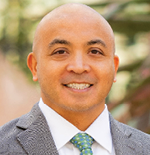
Lem Garcia is a personal injury attorney and the Founder of Lem Garcia Law in West Covina, California. He specializes in car, truck, and motorcycle accident cases, slip and fall injuries and wrongful death claims. Known for his personalized approach, he is known to provide clear communication and hands-on legal representation to ensure his clients understand their rights and feel supported throughout the process. With a track record of successful settlements and courtroom wins, Lem’s dedication to his clients has earned him a strong reputation for trust and integrity in Southern California’s legal community. For more information, visit www.lemgarcialaw.com.
Autonomous Vehicle Cases: Why Intake Can Make or Break a Claim
Lem Garcia • November 2, 2026
On July 26, 2026, a collision involving a Waymo vehicle, a blue sedan, and a pedestrian occurred in the Pico-Union neighborhood of Los Angeles, hospitalizing two people and reportedly injuring others. According to Waymo, its vehicle was traveling at 27 mph when the sedan, going substantially faster, struck a pedestrian outside a crosswalk, then veered head-on into opposing traffic, hitting the autonomous vehicle (AV). Waymo claims the AV did nothing wrong, but the cause of the incident is still under investigation.
The AV’s presence steers what must be investigated but does not determine who caused the accident. In an AV collision, liability may depend heavily on what the vehicle’s data reveals about causation, and some of that evidence may be difficult to recover if it is not identified and preserved quickly.
For Southern California plaintiff firms, that changes the intake process immediately. An AV collision may initially look like an ordinary automobile case, but within hours it can raise questions involving product liability, software, data preservation, insurance coverage, and whether the firm has the expertise and resources to handle it. The decisions made within the first 48 hours after intake can significantly shape the case, often before any liability theory should be chosen.
The Legal Engine: Causation, Not Blame
A manufacturer is not automatically liable for its AV involvement in an accident, nor should a lawyer take the company’s account of the accident wholesale at intake. The critical causation question may be more about whose conduct substantially contributed to the crash or increased the injuries than about who initiated the danger that caused the harm. California applies the substantial factor test for causation, which is specifically applicable to multiple potential causes and measures which actors’ conduct materially contributed to the harm.
In the Pico-Union facts, the sedan appears to have initiated the sequence by speeding and striking the pedestrian, then swerving into opposing traffic and hitting the AV. However, the AV’s data may reveal not only that the AV detected the pedestrian and speeding sedan, but when it did and what it interpreted those objects to be.
An AV’s operational design domain (ODD), perception system, and response to unexpected roadway conditions may therefore become relevant to causation. In a dense environment such as Pico-Union, counsel should determine what the vehicle detected, how surrounding objects were classified, and whether the system’s braking, steering, or path-planning response affected the severity of the collision. Those questions cannot be answered simply from the fact that an AV was involved; they require the underlying data.
As such, an attorney must start by asking the right questions and gathering the right information. If the AV detected the sedan, its speed, and the pedestrian, how did it react, and did its response worsen or lessen the accident outcome? Did it respond more quickly than a human could have, which may have reduced the damages?
Information concerning the AV’s sensors, remote communication, braking, steering, and acceleration may, in part or in whole, implicate or exonerate the AV and clarify who or what is responsible for the accident and to what degree. Therefore, attorneys should not commit to a theory before examining the data.
The Evidence Clock Starts Immediately
The most important evidence in an AV case may be sitting on a server and not for long if no one asks for it. Counsel should send broad preservation demands to all who may possess relevant evidence, such as the manufacturer, AV system developer, fleet operator, software designer, component suppliers, maintenance provider, and remote assistance provider. What the AV perceived and recorded may provide critical insight into causation, not limited to the moment of collision or the period immediately prior.
Thus, data from sensors, such as cameras, lidar, and radar, can capture what the AV “saw.” The AV’s reaction and perception may be discovered through object detection and classification information, steering, braking, and acceleration data, and path planning and collision prediction data. System warnings, interventions, disengagements, remote assistance requests and communications can reveal what the AV detected, how it responded, and who controlled the response. Software and system faults, along with records of inspections, maintenance, repairs, and calibration, may show how the AV functioned, while ride-request, routing, and trip information may reveal whether the AV operated within conditions relevant to its ODD and performance.
Counsel must also seek standard accident evidence immediately, such as surveillance video, dashcam footage, traffic-camera recordings, witness statements, scene photographs, roadway conditions, and information about other involved vehicles, which may be just as perishable from overwriting as AV sensor and server data.
California Vehicle Code § 38750 requires AVs operating in autonomous mode to capture and preserve at least 30 seconds of certain sensor data surrounding crashes, in read-only format, for three years. However, that is a minimum. The statute does not cover remote operator logs and maintenance and calibration data; a firm still needs to send a preservation letter quickly, not assuming the data will simply be there later, given how it can disappear in ordinary business cycles.
Other relevant evidence may come via Assembly Bill 1777’s regulatory Notices of Autonomous Vehicle Noncompliance (NAVN). The bill allows law enforcement to issue a NAVN after observing an AV Vehicle Code violation or traffic ordinance while engaged in autonomous mode. The notice details the type, date, time, and location of the vehicle and alleged violation. And while the statute creates no safety presumptions, the information may provide investigative leads.
Competence, Coverage, and the Referral Decision
AV cases are typically complex and time-sensitive, with multiple parties, causing the personal injury lawyer to acquire the expertise to understand and evaluate software, engineering, accident reconstruction, data preservation, administrative regulation, and data analysis, among other technical areas supporting ordinary negligence, strict products liability, negligent or defective design, regulatory violations, and failure to warn theories. Strict product liability requires proving a defect and causation, not the duty, breach, and causation of negligence, which determines how much and how early a firm needs to consider applicable tests, such as consumer-expectation or risk-benefit.
But that does not mean the attorney must be an expert; the attorney must find the right experts and associations to competently conduct discovery and prepare for trial. California Rule of Professional Conduct 1.1 requires a lawyer to provide competent representation through the education and skill reasonably necessary for a particular matter or associating with those who have it. Creating those associations early in a case is imperative after an early assessment of what resources a case requires to prosecute it and whether the firm has them, such as forensic software and engineering expertise.
That competence obligation extends to coverage, as well. Early mapping of the commercial auto, products liability, and technology/E&O policies of multiple entities, such as component suppliers, manufacturers, and software vendors, for coverage is crucial for early and ongoing settlement discussions.
Accident cases are governed by tort principles, including those involving AVs. The difference is the evidence needed to prove those principles. An AV case may be shaped from the moment it reaches intake by whether counsel recognizes what the case might become, identifies the evidence that must be preserved, and determines early whether the firm has the resources and expertise to handle it.
Advertisement

Advertisement

Advertisement

Contact Daniel Kim DK Law 555 Anton Blvd., #600 Costa Mesa, CA 92626 833-634-1497 dklaw.com
Contact Daniel Kim DK Law 555 Anton Blvd., #600 Costa Mesa, CA 92626 833-634-1497 dklaw.com
Contact William O. London Kimura London & White LLP 17631 Fitch Irvine, CA 92614 949-776-2874 www.klw-law.com

Contact Gomez Trial Attorneys 755 Front Street San Diego, CA 92101 TheGomezFirm.com