
Katie Hollar Barnard is the Founder and Chief Executive Officer for Firesign to help legal industry clients attract, win, and retain business. She draws upon more than 10 years of experience at two of the nation’s largest law firms to build brands that connect and business plans that deliver. Learn more at www.firesignmarketing.com.
AI and Law Firm Recommendations: What are LLMs Actually Crawling?
Katie Hollar Barnard • April 1, 2026
Your ideal client opens ChatGPT and types in “Make me a short list of the best lawyers for [your specialty] in
[your location].”
Will you show up? It’s a complicated answer for many reasons:
- The longer one uses a given LLM, the more it tailors responses—and incorporates assumptions about
one’s preferences.
- It’s only a matter of time before the companies behind these tools monetize the results. Google AI Overviews
are already doing it.
- LLM responses are incredibly inconsistent, even within the same platform. Research shows that there is less than a 1 percent chance that ChatGPT or Google AI will give you the same list of brands in any two responses. Claude is the consistency leader at a whopping 1.65 percent.
- There is a considerable Big Law bias that will challenge many small firms.
All of this while experts predict everything from a deflated AI bubble to Skynet becoming self-aware.
At best, assessing AI visibility right now feels like being a meteorologist on the local news: I can tell you the current conditions and look about ten days out. (But a thunderstorm may still pop up tomorrow.) It’s dangerous to rely on sweeping one-size-fits-all “get seen on AI” advice. I saw a statistic last week claiming that something like 96 percent of AI results come from earned media; that’s not accurate.
To understand what the LLMs are looking at—right now—let’s take a look at an actual boutique law firm for which I did this analysis. To eliminate bias, we use special software that rotates IP addresses daily; to provide reliable trend data, it runs thousands of queries.
While every law firm’s context is different, this can help you see the sources LLMs use to recommend lawyers and law firms.
We set up an exercise based on this law firm’s practice areas (i.e., What are the best law firms for XYZ litigation?), and tracked the sources. This shows not only what resources the LLMs rely on, but also how different their outputs can be.
ChatGPT
Favorite source: Wikipedia. ChatGPT referenced law firm pages on Wikipedia in 35.6 percent of queries. No other source topped 9 percent.
Runner-up: Large law firm practice pages. Among the top 20 most frequently cited domains, 16 were law firms, and eight of those were AmLaw 200 firms. On these websites, the LLMs are crawling practice pages, not lawyer biographies or educational content. (This is a marked difference from human habits; your carbon-based lifeform clients will look at biographies more than anything else.)
Rankings: ChatGPT does not rely on rankings. It references Chambers in 4.1 percent of queries, the only lawyer ranking to make the top 20 most frequently cited sources. Legal 500 surfaced in 2.7 percent of answers, and Best Law Firms and Martindale both showed up in 1.4 percent.
Earned media: ChatGPT isn’t bullish on traditional news, either. It referenced a regional legal trade publication in 6.8 percent of answers; a national newspaper in 2.7 percent; and a global news site in 1.4 percent. These were the only three “earned media” sources cited in the top 100.
Wild card: ChatGPT loves lurking on Reddit. It was the No. 11 most-cited source. To be sure, some of the pages ChatGPT cited were dedicated to kvetching about associates, but in this LLM’s eyes, Reddit is a reliable source.
What I’d recommend: If you want to prioritize ChatGPT, I’d tell you to prepare to play a long game and earn a Wikipedia page. For a shorter turnaround and simpler actions, you should align your practice pages to accommodate both humans and robots (and that’s another article).
Perplexity
Favorite source: Awards and rankings, and it’s not close. Perplexity cited Super Lawyers in just more than half (50.7 percent) of all answers. Right behind it: Best Lawyers, with 45.2 percent, and Chambers, with 38.4 percent.
Runner-up: Law firm practice pages. Among the top 20 most frequently cited domains, 12 were law firms. The big-firm bias is a little less pronounced on Perplexity: just three of the 12 were AmLaw 200 firms.
Rankings: As stated above, Perplexity favors rankings more than any other source. The platform tends to steer people toward resources that help them scout law firms on their own, rather than explicit recommendations. Other rankings and roundups in the top 20 include Avvo (27.4 percent); BTI Consulting’s client recommendations (20.5 percent); and Vault (17.8 percent).
Earned media: The only traditional earned media cited was Law360 (in 1.4 percent of answers).
Wild card: Perplexity also likes Reddit; Reddit chats surfaced in 17.8 percent of answers. Unlike ChatGPT, there were zero citations for Wikipedia.
What I’d recommend: For Perplexity, work on your rankings game. I would prioritize Chambers department rankings in the practices and regions that matter most. Keep your lawyers active in Super Lawyers and Best Lawyers voting, and explore paid placements for your most lucrative niches.
Google AI Overviews
Favorite source: There’s a slight edge to law firm websites, but it’s less pronounced than the favoritism shown by the other LLMs to their preferred sources. Among the top five sources, three are law firms; one is Chambers; one is Vault.
On Google AI overviews, small law firms with smart SEO fare better. Of the 13 law firms cited most frequently, only two were Am Law 200 firms. One firm was a sole practitioner. Google AI overviews are more democratic—and reward firms that play Google’s original game.
Runner-up: Legal reference pages took three of the top 10 spots. This includes Vault (31.9 percent) as well as law firm lists maintained by BCG Search (16.7 percent) and BTI Consulting (16.7 percent). Like Perplexity, Google AI overviews often direct users to resources that help them scout lawyers themselves.
Rankings: Google AI overviews rely less on rankings than Perplexity does, but Chambers was the second-most-cited source, appearing in 36.1 percent of all answers. Other industry accolades that appeared: Super Lawyers (15.3 percent); Legal 500 (11.1 percent); Best Lawyers (5.6 percent); Best Law Firms (1.4 percent).
Earned media: Google AI overviews cited earned media more than the other LLMs. Law360 appeared in 22.2 percent of answers, ranking seventh-most-cited, but usage dropped afterward. The ABA Journal, Law.com, and a specific regional legal trade were each cited in 1.4% of answers. (Note that this is the LLM with the highest use of earned media, but it doesn’t approach the apocryphal claim that 96 percent of LLM answers use earned media).
Wild card: Pay-to-play newswires. Google AI overviews treat press releases posted on PR Newswire and EIN Presswire as “news.” Savvy law firms used this to announce rankings in Best Law Firms and major case results.
Interestingly, there were no Wikipedia citations, and Reddit was cited only once.
What I’d recommend: Specific to Google AI overviews, look to build a well-rounded online presence—just as you would for traditional Google results. Consider using paid newswires to share major accomplishments and rankings.
The Bottom Line
There is no magic answer to AI visibility, but this actual case study shows the sources each platform tends to favor.
Without getting into tactical takeaways (which should be based on your firm’s context), here are the two primary lessons:
- While there’s no silver bullet to top all of the LLM charts, a well-rounded online presence will help you rise across all of them. Many of these pieces work together; for example, we know that Google AI likes earned media, but ChatGPT favors Wikipedia. What helps you get a Wikipedia page? Earned media mentions.
- If it’s worth saying, it’s worth repeating. LLMs pull from varied sources. If your firm ranks Band One in Chambers, it will obviously appear on that site, but it should be on your practice page and run as a newswire item. Demonstrate your firm’s strengths consistently and frequently across a variety of outlets. No one, human or bot, is scanning just one source.
A comprehensive approach and consistent messaging: These fundamentals have been key to effective law firm marketing long before generative AI, and they will be instrumental to your firm’s success with it.

Advertisement

Advertisement

Advertisement


Contact Gomez Trial Attorneys 755 Front Street San Diego, CA 92101 TheGomezFirm.com

Contact CaseyGerry Francavilla Blatt LLP 110 Laurel Street San Diego, CA, 92101-1486 619-238-1811 www.CaseyGerry.com

Contact Rosing Pott & Strohbehn LLP 770 1st Avenue, Suite 200 San Diego, CA 92101 619-990-3158 www.rosinglaw.com
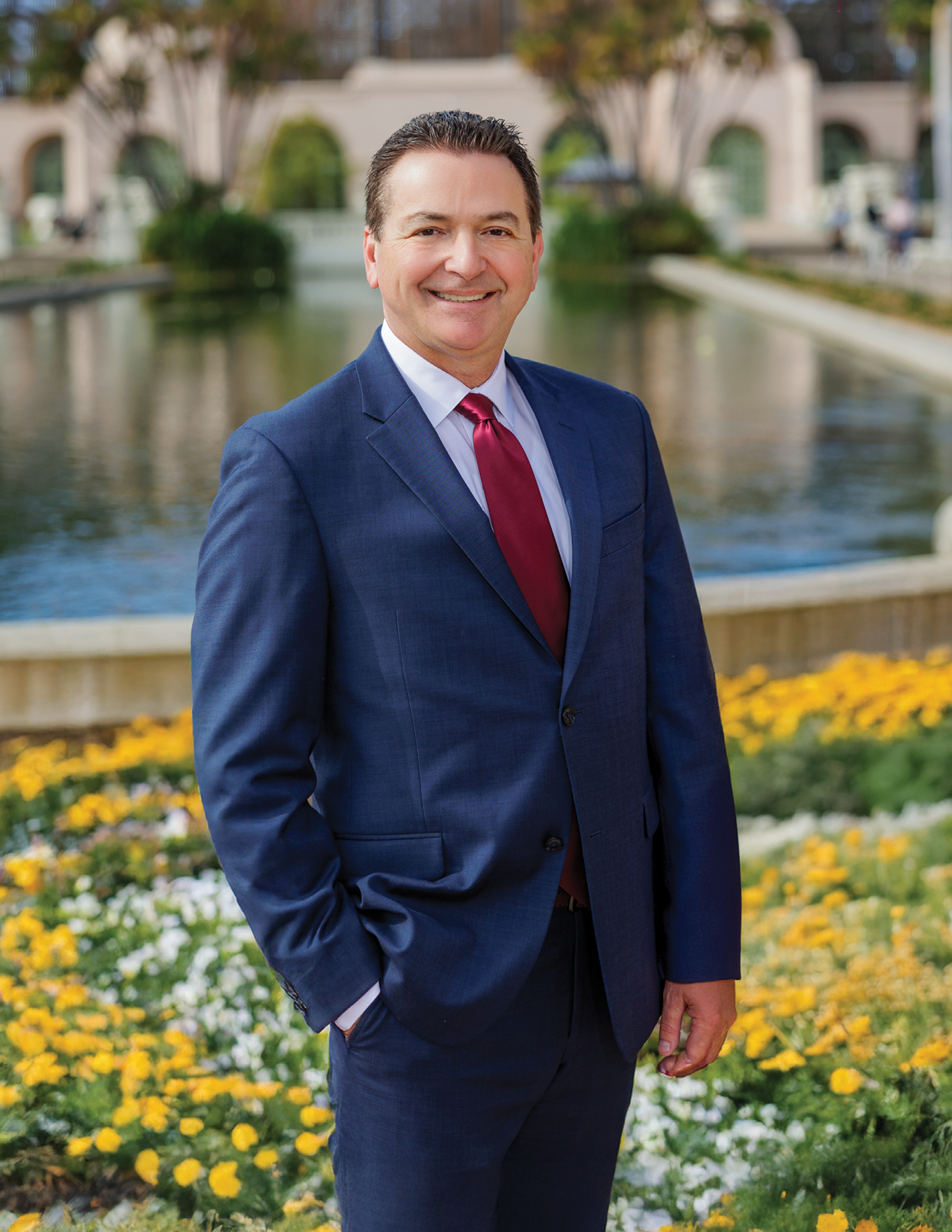
Contact Erik Friis Superior Law Center 2667 Camino del Rio South, Suite 304-1 San Diego, CA 92108 619-743-9130 www.superiorlawcenter.com